
Many Bundesliga bettors never built a serious pre-match routine during the 2017/18 season, not because they lacked interest, but because they lacked time. Between work, study, and other obligations, sitting down for a full data dive on every fixture was unrealistic, so decisions often defaulted to gut feel, league tables, or social media opinions. A compact but logically structured analysis slip offers a way out: it prioritizes the few inputs that meaningfully affect match probabilities and ignores noise, allowing a constrained time budget to still produce coherent, repeatable decisions.
Why a Short, Structured Slip Beats “Quick Impressions”
Relying on first impressions of form and reputation seems efficient, yet it quietly imports bias and recency effects into every bet. In 2017/18, the Bundesliga table and headlines alone often led bettors to overrate temporary streaks and underrate schedule difficulty, injury clusters, or tactical stability. A structured slip forces you to ask the same limited set of questions before every stake, turning “five minutes of scrolling” into “five minutes of targeted checks” that directly influence the probability you assign to each outcome.
The core benefit is compounding: each individual match may see only a small improvement in decision quality, but across dozens of fixtures, systematically checking key factors reduces the frequency of avoidable errors. Over a full season like 2017/18, that difference in process—rather than any one spectacular prediction—determines whether a time-poor bettor edges toward break-even or drifts steadily into loss.
The Minimum Information Set for a Busy Bundesliga Bettor
When time is limited, you cannot track every statistic or watch every press conference. The realistic goal is identifying a minimum information set that captures most of what matters: recent performance, squad availability, match stakes, and basic price sanity. Research on pre-match betting and practical guides converge on a similar cluster of priorities—team news, form, context, and odds comparison—as the backbone of efficient analysis.
For Bundesliga 2017/18, this meant focusing less on deep tactical minutiae and more on questions with clear probabilistic impact. Has one team played an intense midweek match? Is a key striker or center-back missing? Is this fixture critical for European qualification or relegation survival? These details shifted real win probabilities far more than, say, a minor formation tweak noted in passing. By locking these elements into a fixed, short checklist, you ensure each match receives at least a basic rational review before any money is committed.
Translating the Season Schedule into a Quick-Scan Context
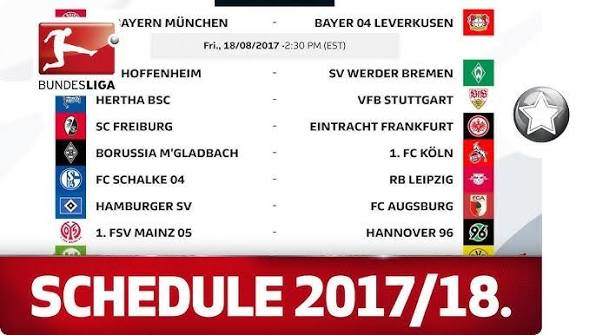
The structure of the 2017/18 Bundesliga season, with its regular weekend fixtures and occasional midweek commitments, created predictable fatigue and rotation patterns. A time-efficient slip needs to integrate this schedule context without asking you to manually study every game log. The key is to translate the calendar into two or three simple context tags you can assign in seconds: “fresh,” “normal,” or “fatigued.”
By glancing at recent fixtures—particularly for clubs involved in European competitions or deep cup runs—you can quickly classify which team is more likely to rotate or show physical drop-off. Even a crude tagging system adds nuance to your probability estimates: when a strong favorite is also in a “fatigued” state, you may adjust expectations slightly downward, making the baseline price less attractive. Conversely, a mid-table side with a “fresh” schedule edge against a tired opponent might justify a small upward tweak in their estimated chance, and thus more interest if the odds have not fully accounted for that advantage.
A Practical H3 Breakdown of the Slip’s Core Mechanism
Once you understand why each factor matters, the pre-match slip becomes a mechanism for compressing reasoning into a fixed order. That mechanism relies on two strokes: identify the small set of high-impact variables, then enforce a consistent sequence that forces you to weigh them before looking at odds.
How the slip turns limited time into consistent decisions
The slip’s mechanism is to front-load objective checks before subjective impressions, so you do not anchor on the bookmaker’s price first. By moving from team news to form to context and only then to odds, you generate an independent mental estimate of likely outcomes before seeing whether the market’s view is higher or lower. This sequence transforms even a five-minute window into a disciplined mini-process, reducing the influence of stress, distraction, or social media narratives on the final bet.
Integrating UFABET into a Time-Constrained Workflow
When you put this slip into practice, the choice of where you ultimately place your bets becomes part of the workflow rather than an afterthought. Suppose you have quickly tagged a 2017/18 Bundesliga match as featuring a slightly undervalued home favorite based on basic team news, form, and schedule context. With only a few minutes available, you want an environment where you can compare your assessment with the posted lines and act without friction. Under these situational constraints, a sports betting service such as ufabet168 can be evaluated analytically from the perspective of how efficiently it lets a user apply a pre-defined slip: clarity of odds display, stability of lines, and straightforward access to standard markets all determine whether limited preparation time actually converts into consistent, well-executed positions rather than rushed, last-second decisions that drift away from the checklist logic.
From this angle, the quality of your interaction with the service becomes a silent multiplier on your preparation. If you routinely spend half of your available time just finding the right market or deciphering the layout, your carefully constructed slip loses power because execution becomes rushed. Conversely, when the user experience aligns with your workflow—fast navigation to Bundesliga fixtures, transparent pricing, and easy stake input—the same five or ten minutes of analysis produce cleaner, less error-prone bets.
Example: A Short, Repeatable Pre-Match Checklist for 2017/18
With the logic in place, you can compress it into a simple checklist that fits on a small slip or note and can be reused throughout the season. Before placing a bet, the aim is to walk through each point quickly but consciously, ensuring no major factor is ignored.
- Team news and key absences
- Recent form over the last 4–6 matches
- Schedule and fatigue (rest days, travel, extra competitions)
- Match stakes (title race, Europe, mid-table, relegation pressure)
- Basic stylistic clash (attacking vs conservative, high vs low tempo)
- Your rough probability estimate before seeing odds
- Comparison between your estimate and current odds, including margin
This list is short enough to run in a few minutes per match yet structured enough to systematically catch the most common oversights. It nudges you toward consistency: every fixture is judged against the same lens, reducing the impact of mood or external noise. Over time, recording how your quick estimates compare with outcomes also lets you refine the slip—if you consistently misjudge fatigue or stakes, you can adjust the weight you give those factors while still keeping the process tight.
After applying this checklist, the quality of your “no bet” decisions becomes just as important as the bets you do place. When your pre-match slip highlights unresolved uncertainty or a lack of clear edge, walking away is itself a disciplined outcome that protects a limited bankroll and leaves your scarce time free for matches where the information is clearer and the price discrepancy more meaningful.
Using a Simple Table to Prioritize Factors Under Time Pressure
Not every day allows even a full check of the entire slip. On particularly busy matchdays, you may need to prioritize within your own checklist, focusing on the subset of factors that offer the highest informational return per minute. A compact table helps rank those dimensions by their average impact on match probabilities for a league structured like the 2017/18 Bundesliga.
| Factor | Typical time cost | Average impact on probability | Priority when time is tight |
| Key injuries/suspensions | Low | High | Always check |
| Recent form (4–6 games) | Low–medium | Medium–high | Check when possible |
| Schedule/fatigue | Medium | Medium | Check for top/European clubs |
| Match stakes | Low | Medium | Quick classification |
| Stylistic clash | Medium | Medium | Optional when very rushed |
This prioritization helps you adapt the slip to your actual day. If you have only three minutes, you at least confirm key absences and basic form; if you have ten, you layer in fatigue and stylistic considerations. The critical insight is that skipping an entire checklist because you “don’t have time for everything” is usually worse than executing a streamlined version that focuses on the highest-yield inputs.
Where a Pre-Match Slip Fails for the Time-Poor Bettor
Even a well-designed slip can be misused. The most common failure mode for time-poor bettors is treating the checklist as a box-ticking ritual without letting it influence their actual decision. In those cases, they may skim team news or form but still default to a favorite or narrative-heavy choice they had in mind beforehand, turning the slip into a post-hoc justification instead of a decision driver. Another frequent issue is overloading the slip with too many niche metrics or ad hoc notes, causing fatigue and leading the bettor to abandon the process after a few weeks.
A second failure mode appears when bettors ignore record-keeping. Without tracking which matches were analyzed under time pressure and how the slip’s factors aligned with outcomes, there is no feedback loop to refine or simplify the process. Over a season like 2017/18, this lack of learning means the same mistakes—underestimating fatigue, overrating form, or misunderstanding stakes—repeat unnoticed. The slip only becomes a genuine asset when it is both used consistently and periodically audited against results, even if that audit itself is brief and focused on the most common decision types.
How casino online Environments Interact with Pre-Match Discipline
The value of a pre-match slip does not stop at kickoff; it must also survive contact with the digital environment where bets are placed and later monitored. For many 2017/18 Bundesliga followers, mobile access and constant notifications made it easy to undermine pre-match discipline with impulsive in-play decisions. When viewed analytically under this constraint, a casino online website is not just a venue but a behavioral setting that can either reinforce or erode the boundaries set during pre-match analysis. If the design emphasizes quick in-play options and frequent prompts to “add more” on emotional swings, it increases the risk that carefully reasoned pre-match stakes are diluted by spur-of-the-moment live bets that were never run through the slip.
To keep the slip effective, a time-limited bettor may need explicit rules about how pre-match decisions interact with any in-play activity offered by that environment. For example, they might restrict live betting to hedging or partial cash-out decisions driven by large, clear information shifts—such as a red card or major injury—rather than routine fluctuations in match flow. In practice, this means the pre-match slip not only structures initial decisions but also defines when in-play markets should be ignored, ensuring that the disciplined work done before kickoff is not undone by the temptations of a highly responsive online context.
Summary
For someone with limited free time during the 2017/18 Bundesliga season, the key to rational betting was not more information, but more structure. A concise pre-match slip built around team news, recent form, schedule context, match stakes, and a quick price sanity check allowed each match to be evaluated through a repeatable process rather than fleeting impressions. By prioritizing high-impact factors, adapting the depth of analysis to available time, and recognizing how betting environments can both support and undermine discipline, a bettor could convert a few focused minutes into consistently better decisions. Over many fixtures, this disciplined routine is what separates a series of loosely connected guesses from an intentional, learning-oriented approach to Bundesliga betting under real-world time constraints.