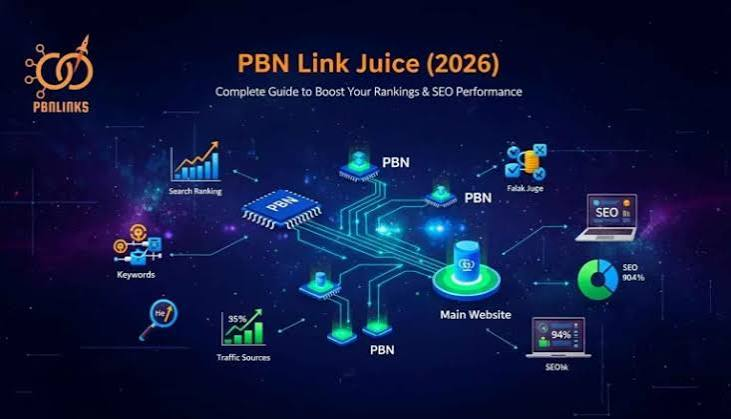

The traditional model of a PBN site — thin content existing purely to house an outbound link, with no real audience or independent purpose — has become increasingly fragile as detection has improved. A more durable approach treats each site in a network as a genuine small property capable of ranking and driving its own traffic, with link equity as a secondary benefit rather than the sole reason the site exists.
Why Pure Link-Farm Sites Have Become a Liability
A site with no organic traffic, no independent search visibility, and content that exists only to justify an outbound link is exactly the profile that pattern-based detection is built to identify. There’s no organic signal — no independent rankings, no genuine engagement, no natural traffic pattern — to counterbalance the fact that the site’s only real activity is linking elsewhere. Sites that can independently rank for their own relevant terms and attract real visitors look fundamentally different from this pattern, even when they’re part of the same broader network.
What Changes When a Site Is Built to Rank Independently
Building a network site around genuinely useful content targeting real, achievable keywords — rather than content written purely as a vehicle for a link — means the site develops its own organic traffic, its own search visibility, and its own reason to exist independent of the network’s link building purpose. This dual function makes the site considerably more resilient, since even scrutiny that specifically targets link patterns finds a property with genuine independent value rather than an empty shell.
Choosing Achievable Keyword Targets for Network Sites
A newer network site with modest authority won’t compete for the same competitive terms as an established flagship property, so targeting genuinely achievable long-tail or niche keywords — ones a new, well-executed site can realistically rank for — is what makes the independent traffic goal practical rather than aspirational. This requires the same keyword research discipline that would go into planning content for any standalone site, rather than treating network content as an afterthought.
Investing in Content Depth Proportional to the Site’s Role
This approach doesn’t require every network site to receive flagship-level content investment — it requires enough genuine depth and usefulness that the site could plausibly stand on its own, even if its actual traffic volume stays modest. The bar is “would a real visitor find this genuinely useful,” not “does this match the production quality of a dedicated brand’s primary site.”
Measuring Success Beyond Just the Outbound Link’s Performance
Tracking organic traffic and keyword rankings for network sites themselves, not just monitoring the performance of the pages they link to, provides a useful secondary signal about whether the network is functioning as genuine properties or reverting to the thin, traffic-free pattern that’s easiest to detect. A network where individual sites show real, growing organic visibility is a meaningfully different asset than one where every site shows flat, negligible traffic outside of crawler visits.
Applying This Shift in Practice
Making this shift requires treating network content production with the same care as any standalone content project, rather than defaulting to the fastest, cheapest option purely because the site’s primary purpose is link building. Our full guide to Building PBNs That Rank covers the specific keyword research and content planning process for network sites in more depth.
A network built from genuinely capable individual sites is both a more effective link building asset and a fundamentally more durable one, since each site’s independent value gives it a reason to exist that survives scrutiny focused purely on link patterns.