

Starting a degree in computer science feels a lot like being dropped into a foreign country without a map. In the first few weeks, you are hit with a wave of brand-new terms: loops, arrays, recursion, and compilers. It is easy to assume that the smartest students in the room are the ones who already know three programming languages or spend all their spare time building custom operating systems. But here is a secret that many graduates only realize looking backward: surviving and thriving in this field has very little to do with raw coding talent. Instead, it relies on how you manage your time, how you break down problems, and how you approach learning things that feel impossible at first glance.
The biggest trap for a computer science undergraduate is treating a programming course like a traditional history or language class. You cannot just memorize a stack of flashcards the night before a major test and expect to pass coding exams. Writing software is a practical skill, much like learning to play an instrument or mastering a sport. You have to build muscle memory by writing messy, broken code, and then fixing it. Finding an effective computer science study guide means moving away from passive reading and moving toward active, hands-on troubleshooting. The sooner you accept that your programs will crash—and that a crash is just feedback, not a personal failure—the faster you will grow.
When the workload builds up, smart students look for reliable support networks to keep their GPA intact. For instance, if you find yourself struggling with complex regional curricula or need specialized guidance on a tight schedule, turning to localized academic resources such as assignment help Newcastle at https://myassignmentservices can give you the clarity you need, while coordinating your overall study strategy with a premier global provider like myassignmenthelp ensures your foundation stays solid across all modules. Having these resources in your back pocket prevents minor misunderstandings from turning into failed courses, allowing you to keep up with the fast-moving syllabus without burning out.
1. Shifting from Syntax to Logic
Many beginners spend weeks stressing over where to put semicolons or memorizing specific function names in Python or Java. This is a waste of energy. Syntax is just the mechanics of how a specific language wants you to type an instruction. If you forget a command, you can look it up in two seconds on Google or inside your documentation. The real skill is logic—the step-by-step plan that tells the computer what to do, regardless of the language you are using.
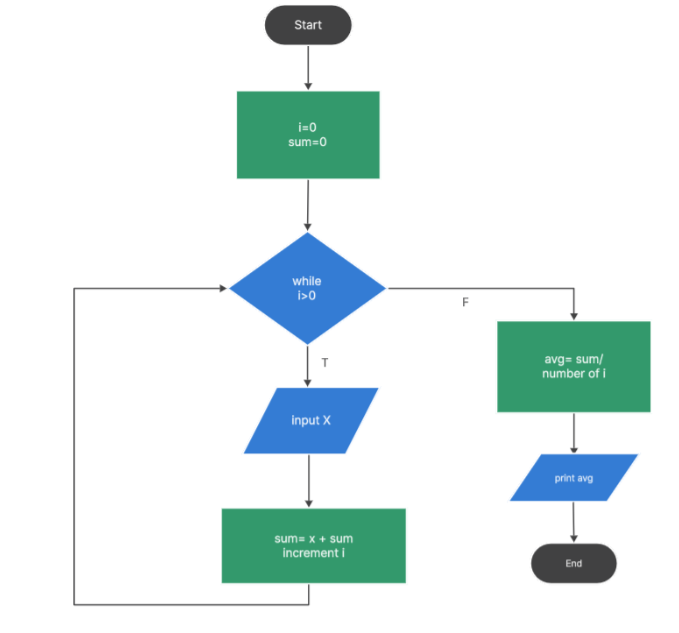
Before you type a single line of code for a project, step away from the keyboard. Grab a piece of paper or a whiteboard and write out your logic in plain, everyday language. This is called pseudocode. If you cannot explain how to solve the problem in simple English sentences, you will never be able to code it in C++ or JavaScript. Breaking a massive problem into three or four tiny, manageable steps makes the entire assignment feel less intimidating.
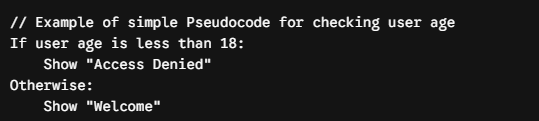
When you understand the logic, switching between programming languages becomes simple. The core concepts of conditions, loops, and data tracking remain the same whether you are building a mobile application or configuring a database backend. Focus your energy on solving the problem conceptually first, and the typing part will take care of itself.
2. Mastering Data Structures and Algorithms
Ask any upper-level student about their hardest class, and they will likely point to data structures or algorithm exam preparation. These subjects form the backbone of computer science because they teach you how data is stored, organized, and processed efficiently. It is the difference between a program that runs in a millisecond and one that freezes your entire computer.
To get a firm grip on these abstract concepts, you need to visualize them. Do not just read about linked lists, binary trees, or stacks in a dry textbook. Draw them out. Use coins or sticky notes on your desk to represent nodes and physically move them around to see how an insertion or deletion works. When you can see how data flows through a structure, the mathematical theory behind it starts to make sense.
Understanding which data structure to deploy is the core marker of a true engineer. Choosing the wrong container can lead to massive performance drops when your application tries to scale up to handle thousands of real-world users.
Core Data Structures Cheat Sheet
| Data Structure | Primary Advantage | Real-World Application Example |
| Arrays / Array Lists | Fast, direct access using numerical index positions | Managing a fixed list of high-score entries in a game leaderboard |
| Linked Lists | Quick data insertion and removal without shifting elements | Building an undo/redo buffer inside a text editing application |
| Stacks (LIFO) | Last In, First Out order naturally preserves history | Tracking browser navigation paths for back-button operations |
| Queues (FIFO) | First In, First Out order enforces fair processing sequences | Managing background print job requests sent to a shared office printer |
| Hash Tables | Instantaneous data lookups using custom key-value pairs | Creating a user authentication system matching usernames to profiles |
3. Creating a Dependable Programming Project Workflow
University coding projects are completely different from homework math problems. You cannot start a 500-line programming project at 10:00 PM on the night it is due and expect it to work by midnight. Software engineering requires a continuous, iterative approach where you write a little bit of code, test it immediately, fix any errors, and only then move forward.
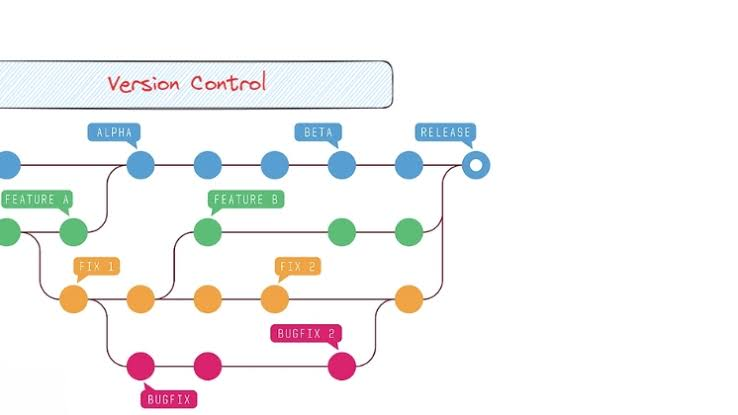
Attempting to build a massive system all at once makes it nearly impossible to figure out which specific component is causing a system crash. Instead, follow a structured, loop-based execution pipeline.
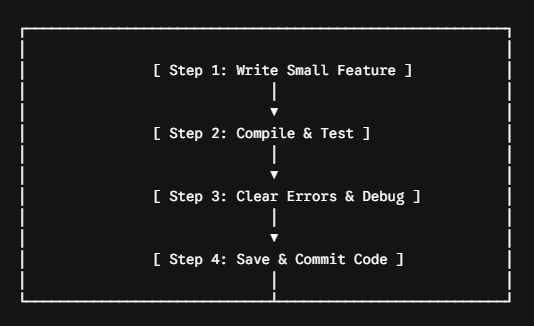
One of the most valuable tools you can learn during your university years is Git. Git is a version control system that acts like a giant “undo” button for your projects. Every time you get a piece of your assignment working correctly, you save a snapshot of it. If you spend the next three hours writing new code that completely ruins the project, you do not have to panic or start over from scratch. You simply roll back to your last saved snapshot. This single habit will save you from countless late-night meltdowns.
4. How to Debug Assignment Methods Without Losing Your Mind
Every computer science undergraduate spends hours staring at a screen, wondering why their program is outputting garbage data or refusing to run at all. Debugging is not an annoying interruption to coding; debugging is coding. Professional software developers spend far more time fixing broken systems than they do writing brand-new features from scratch.
When you run into a brick wall, stop changing lines of code at random hoping it magically fixes the issue. That approach usually creates three new bugs for every one you solve. Instead, use the “Rubber Duck Debugging” technique. Explain your code line-by-line out loud to an imaginary rubber duck on your desk. By forcing your brain to speak the logic slowly, you will frequently spot the exact place where your logic derails.
When self-guided debugging fails and university deadlines are looming, seeking targeted Computer Science Assignment Help can keep your semester on track. Getting an experienced programmer to look at your complex code can expose deep structural issues that you might have missed after staring at the same script for hours.
5. Navigating the Discrete Math Hurdle
Many incoming students are surprised by the sheer amount of mathematics required in a technology degree. You will likely have to face linear algebra, calculus, and discrete mathematics. Of these, discrete math trips up the most people because it does not involve normal arithmetic or calculating angles. It deals with logic gates, set theory, graph theory, and proofs.
The best approach here is consistent, daily practice. Treat math like a language that requires immersion. Spend thirty minutes every single day working through extra practice problems from your textbook. Focus heavily on truth tables and graph networks, as these mathematical frameworks directly influence how compilers optimize code, how relational databases execute lookups, and how networks route data securely across the internet.
6. Building an Essential Tech Portfolio
Getting good grades is only half the battle. When you graduate and start applying for software engineering jobs, employers will care far more about what you can build than your GPA. They want to see tangible proof that you can take a concept and turn it into a working application.
Start working on small personal projects outside of class during your breaks. It does not need to be a revolutionary new social media platform. Build a basic weather app, a simple calculator, or a retro desktop game like Tetris. Store all your projects publicly on platforms like GitHub. A clean portfolio filled with functional, well-commented code tells a hiring manager that you are passionate, driven, and ready to work in a real development team.
Strategic Timeline for CS Undergrads
To make sure you graduate with both an impressive academic record and a job-ready professional resume, structure your four-year undergraduate journey with clear yearly goals.
Focus on Fundamentals & Logic
Year 1: Foundations
Master basic syntax, learn how to read error messages, and practice writing clean pseudocode before building small console applications.
Version Control & Core Theory
Year 2: Infrastructure
Integrate Git into your regular academic workflow. Build a deep, visual understanding of data structures and algorithm analysis.
Personal Projects & Specialization
Year 3: Application
Launch 2 to 3 personal open-source projects on GitHub. Start looking into specialized fields like mobile development, cyber security, or cloud systems.
Interview Prep & Portfolio Polish
Year 4: Launch
Clean up your public code repositories, practice solving coding puzzles under timed conditions, and prepare your technical resume for applications.
7. The Power of Networking and Community
The final element of a successful university experience is learning how to collaborate with others. Coding can often feel like a solitary activity, but real-world software engineering is a team sport. No single developer builds a modern operating system, web platform, or video game alone. You must learn how to communicate your technical ideas clearly and accept feedback from your peers.
Join your university’s computer science club, participate in weekend hackathons, and contribute to group assignments with an open mind. Code reviews—where you analyze a classmate’s script and they critique yours—are incredibly valuable. They expose you to alternative problem-solving frameworks and help you learn to spot logical flaws before they turn into runtime errors.
Key Takeaway: The best students are not the ones who never get stuck; they are the ones who have developed a repeatable strategy for when they do. Cultivate patience, write your code in small steps, use Git version control religiously, and never be afraid to lean on external academic support resources when you need a clear, structural explanation to unlock a complex topic.
Frequently Asked Questions
How can I prepare for difficult programming exams?
Shift your focus away from memorizing syntax. Instead, spend your time writing code by hand, building small practice programs, and working through logical problem-solving exercises without relying on automated tools.
What should I do when my code refuses to run?
Take a break from the screen, then explain your program line-by-line out loud to an object on your desk. This process forces your brain to slow down and helps you quickly spot logical flaws.
Why is mathematics so important in a software degree?
Mathematics provides the foundational logic used to build efficient algorithms, optimize database searches, and secure data networks. Regular daily practice makes these abstract concepts much easier to grasp.
How do I build a portfolio if I have no work experience?
Start by creating small, functional applications—like a basic utility app or a simple game—and host your source files publicly. Employers look for clean, well-documented code that proves you can build real software.
About The Author
Min Seow is a senior academic strategist and lead educational content coordinator at myassignmenthelp, where she specializes in developing comprehensive learning frameworks and student productivity blueprints for undergraduate learners globally.